




By Olivier Fabre
Three centuries ago, the Takanawa district marked the edge of what was then called Edo — the city now known as Tokyo. Its Okido, the "Great Wooden Gate," served as the official entrance to the city, a place where returning travelers concluded their long journeys and where those departing for the provinces first stepped beyond the city limits.
Today, that function is being reborn and reimagined as Takanawa Gateway City, a 9.5-hectare redevelopment (equivalent to approximately 23.5 acres or slightly less than 18 American football fields) led by the East Japan Railway Company, or JR East.
JR East, fully privatized since the 1987 breakup of the state-run network, operates far beyond the scope of a typical transit provider. The company has evolved into a diversified conglomerate and a titan of the Japanese economy, functioning simultaneously as a transportation network, a massive real estate developer and a fintech powerhouse. Despite this diversity, the company remains anchored to the land by an over 150-year railway legacy that traces its beginnings directly to this historic site.
"Takanawa, where we are now, is where the ‘Okido,’ the gateway to Edo, was once located," explains Yoichi Kise, president of JR East. "We named this town 'Gateway' and created this city because we wanted people and diverse cultures from around the world, not just Japan, to visit but also to project and disseminate new ideas and innovations to the world."
The site’s importance predates the Edo period (1603-1868) and, in 1872, it was seen as the cradle of Japanese modernization, where the nation’s first railway — connecting Shinbashi to Yokohama — crossed the sea via the Takanawa Chikutei embankment. During construction, archaeologists found well-preserved sections of its 150-year-old stone structure. Now designated as a National Historic Site, a portion of the embankment is scheduled to officially open to the public in the spring of 2028.
Kise notes that since railways were the catalyst for innovation in Japan, the site represents the birthplace of that progress. "It is truly remarkable that over 150 years ago, our predecessors completed this project in just a year and a half by fusing British engineering with traditional Japanese castle-wall masonry," he adds.
To preserve this heritage, JR East shifted its architectural plans for new skyscrapers by 12 meters to ensure the embankment remained intact. By shifting the literal foundations of a modern skyscraper to save a 19th-century sea wall, the company signaled that this new city would prioritize the preservation of its pioneering legacy.
A living laboratory for "global benefit"
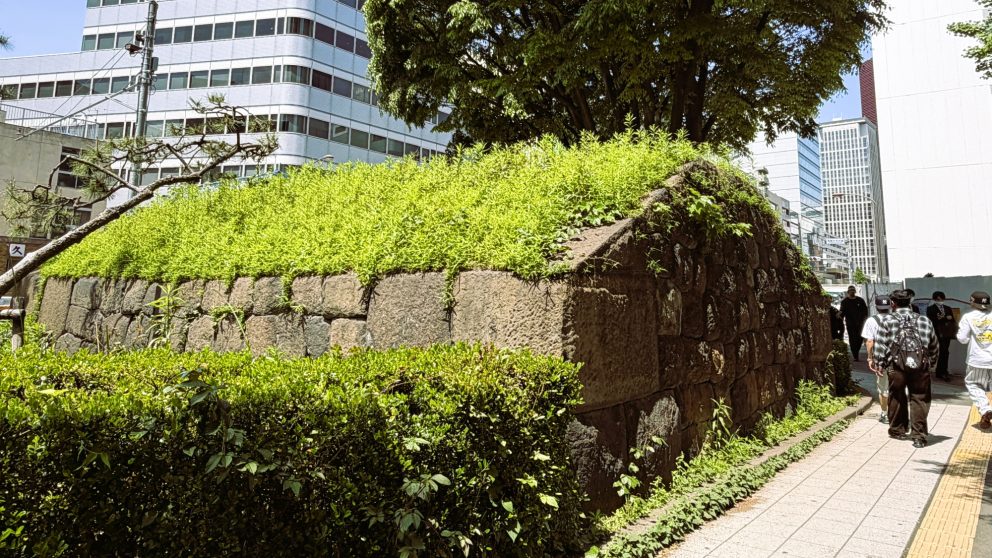
The original Edo-period gate is long gone, with only a bit of a stone wall and a marker left behind. What has risen in its place on the former Shinagawa rail yard is a 610-billion-yen ($3.8 billion) project that Kise remembers as "a completely vacant lot" when he first took charge. It is now one of the most consequential developments in modern Tokyo. Kise is quick to say this isn't a standard real estate play, but rather a testing ground for what he sees as chikyu-eki, or "global benefit."
"When we implement these technologies in society, we inevitably face new challenges," Kise explains. "We bring those challenges back, refine the solutions and then rerelease them. This continuous loop of trial and refinement is how we intend to generate global value from this specific plot of land."
According to Kise, the project is a pivot away from old profit models, favoring a system that tracks success through environmental health and well-being for those within the city and beyond.
A key part of this is LiSH (shorthand for the TAKANAWA GATEWAY Link Scholarsʼ Hub), which acts as a collaborative engine, linking startups and academic heavyweights like the University of Tokyo and the National University of Singapore. Kise says the goal is to multiply knowledge to solve modern crises.
"We currently have nearly 200 organizations already active within our city," Kise says.
These aren't your ordinary tenants, either. One startup is working on AI-enhanced CT scans for painless colon cancer detection at the local clinic. Other teams are using specialized wet labs to recreate ocean environments to examine how urban activity affects marine life. These facilities allow scientists to observe how runoff and heat affect biodiversity in real time.
Cultural narratives and the "MoN" of discovery
Kise says that along with high-tech development they’ve also prioritized culture over maximizing office space. The cultural centerpiece is MoN Takanawa, or the Museum of Narratives. The name "MoN" plays on the Japanese word for "gate," or mon, acting as a door to both the outside world’s culture and a passageway into Japanese tradition.
"From a purely business perspective, building more offices might have been more efficient," Kise admits. "But we are designing a 'city,' not just an office district. Culture is the essential ingredient for human well-being."
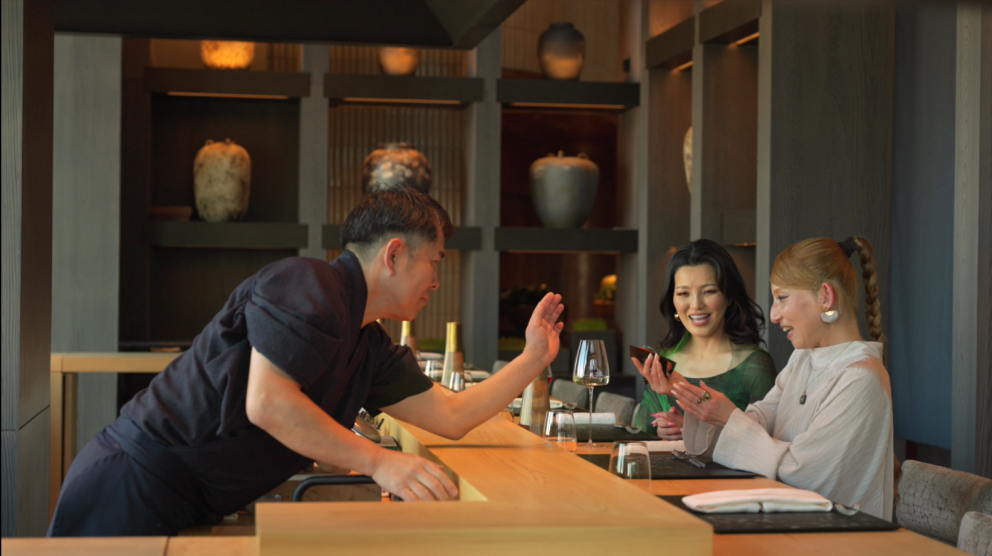
The MoN facility is designed to host both live performances and digital exhibitions, but the standout feature is the Hyakujojiki, a hall comprised of nearly 100 sustainably designed tatami mats made from recycled tea grounds. The space is for visitors to experience Japanese traditions like tea ceremonies or ikebana, not unlike the experimental, "one-of-a-kind" focus of the NEWoMan Takanawa complex nearby, which boasts 200 shops curated for things Kise says can "only be felt and experienced there." The JW Marriott Hotel Tokyo has also joined as a tenant with plans to transcend the boundaries of luxury retail.
Kise views the city not as an isolated hub but as a gateway to the deep historical layers of the surrounding neighborhood. He highlights the proximity of Sengaku-ji, the 1612 Edo-period temple famous as the setting of the Chushingura samurai revenge legend and a staple of Kabuki theater. History is visible in every direction. You can walk to the Taisho-era Koyasan Tokyo Betsuin or the sprawling grounds of Happo-en, where a meticulously kept garden remains from an Edo-period feudal lord's estate. Even the local food scene spans multiple centuries of cuisine. Matsushimaya, a neighborhood institution founded in 1918, has produced traditional sweets for more than 100 years. For Kise, the new complex is simply the latest chapter in a story that began centuries ago.
A forest in the sky and in the heart of city
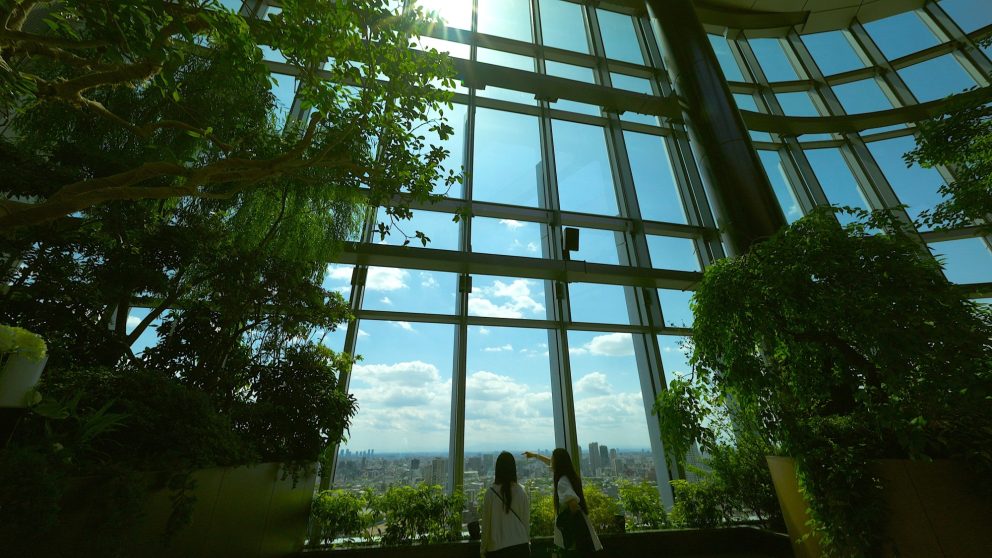
The final goal for Kise is the eradication of the "inorganic" aesthetic common in most modern urban centers. Takanawa Gateway City puts four hectares into the public realm, with nearly half of that consisting of greenery using native Japanese species in an effort to recreate the country's original landscapes within the city limits.
"I didn't want a city of just concrete and steel," Kise says. "I wanted a town overflowing with green where people can experience the seasons.”
This urban greening effort reaches its peak approximately 160 meters above ground at the top of the NEWoMan Takanawa building, where a rooftop forest flourishes with 500 plants sourced from across Japan. It offers a vista of Tokyo that Kise believes is unparalleled, serving as a sanctuary that embodies the serenity at the heart of the project.
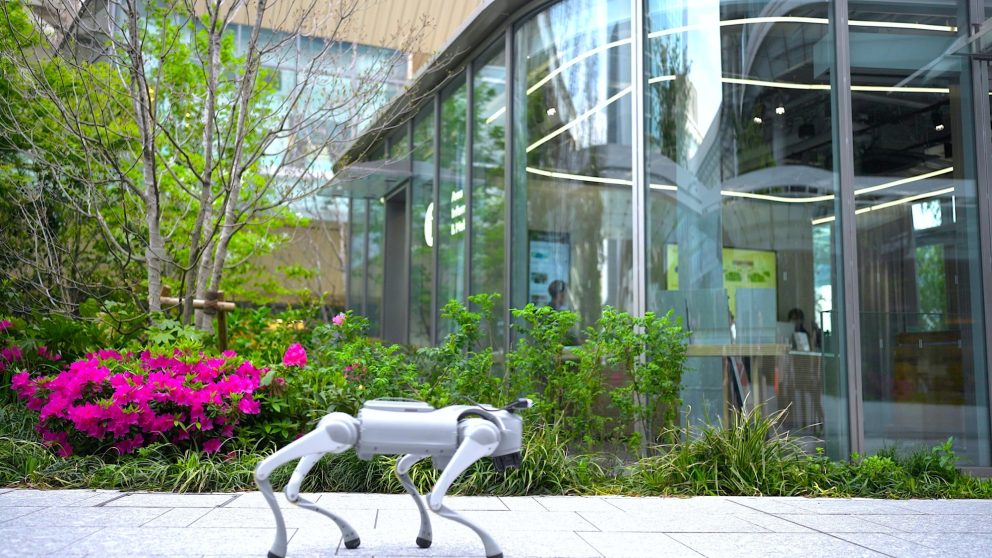
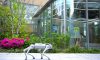
That’s not to say that these natural forests flourish without the aid of technology. A robotic "plant dog" named Hachiko, named after the famous faithful Akita dog, is currently being developed by Agrinome Lab Inc. to serve as a mobile environmental sensor that tracks plant health. While it is still being refined, the project aims to eventually automate the machine to monitor and maintain the complex's vast green spaces very soon — a perfect example of the unique blend of robotics and ecological stewardship that Kise wants to project to the rest of the world.
The breadth of the past, present and future
The Museum of Narratives’ grand opening took place on March 28, 2026. Kise recalls the moment he cut the ceremonial ribbon: "When I first took charge of this project, this was a completely vacant lot. As I used the scissors, I realized, this is not the goal. It starts from here."
For the modern traveler, the city offers a rare opportunity to experience Japan’s past and future simultaneously.
"For those visiting from overseas, I want them to experience the breadth of this area," Kise says. "I want them to feel Japan’s past, present and future all at once."
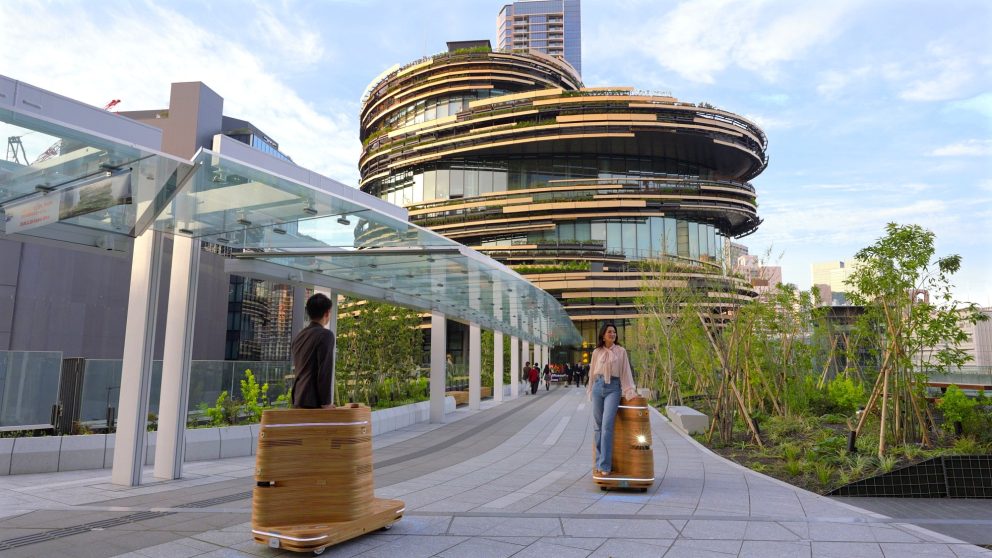
Image 01:
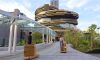
Visitors ride the autonomous mobility vehicle “iino” outside MoN Takanawa: The Museum of Narratives in Takanawa Gateway City. (Video still by AP Content Services ©JR East)
Image 02:
“Okido,” which served as a gateway to Edo some 300 years ago, can still be found near Takanawa Gateway City and continues to attract many visitors. (Photo by Chie Tsuda for AP Content Services ©JR East)
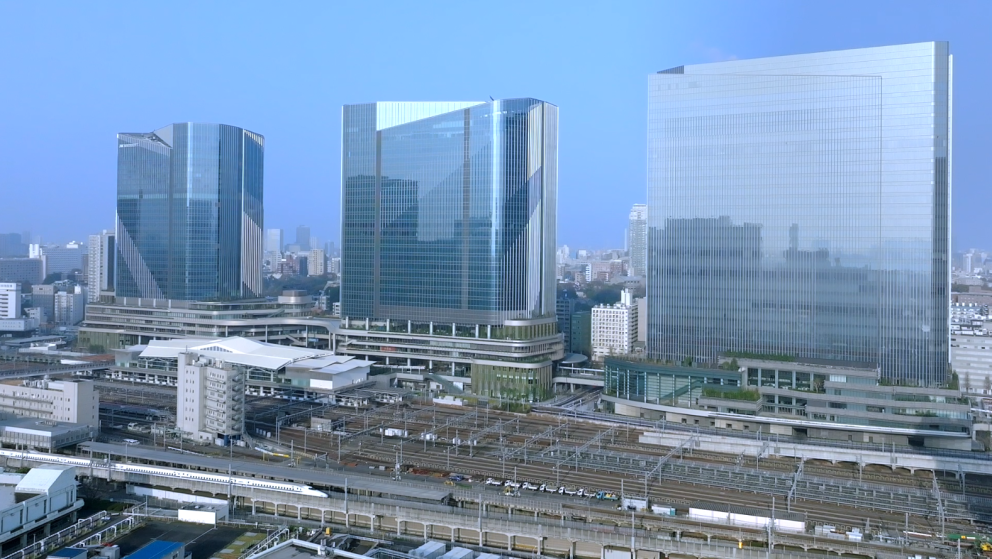
Image 03:
An overview of Takanawa Gateway City, where modern development meets historical Tokyo. (Video still by AP Content Services ©JR East)
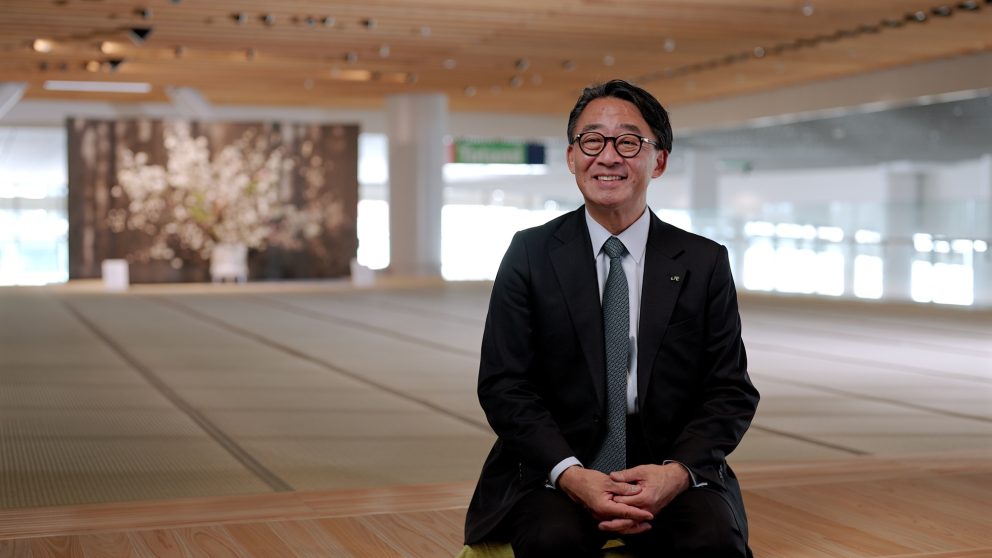
Image 04:
In a Japanese-style room with tatami floors at MoN Takanawa, JR East president and CEO Yoichi Kise talks about Takanawa Gateway City. The room features nearly 100 sustainably designed tatami mats. (Video still by AP Content Services ©JR East)
Image 05:
Pictured: A robotic dog named Hachiko, developed to serve as a mobile sensor to monitor greenery and environmental health. (It was captured in accordance with photo and video regulations by AP Content Services ©JR East)
Image 06:
Enjoying an omakase dining experience at Saki, a Japanese restaurant at JW Marriott Hotel Tokyo in Takanawa Gateway City. (Video still by AP Content Services ©JR East)
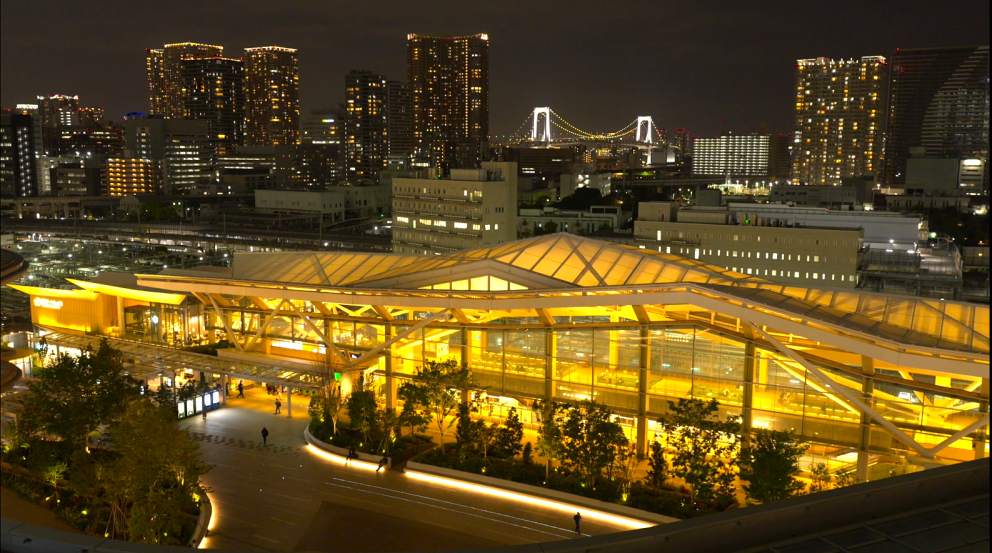
Image 07:
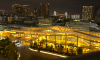
Takanawa Gateway Station, located at the entrance to Takanawa Gateway City, features energy-efficient lighting that adjusts to the time and weather. A city landmark, its origami-inspired roof glows warmly. (Video still by AP Content Services ©JR East)
Image 08:
"I didn't want a city of just concrete and steel," Kise says. "I wanted a town overflowing with green where people can experience the seasons.” (Video still by AP Content Services ©JR East)
