• As NASA pushes forward with missions to the Moon, groundbreaking footage shows the next frontier closer to home: the ocean
• First new open-ocean subsea research habitat in 40 years
• Designed for extended human occupancy underwater as a research and technology testbed • Long-term ambition: to establish a permanent human presence in Earth's ocean biomes
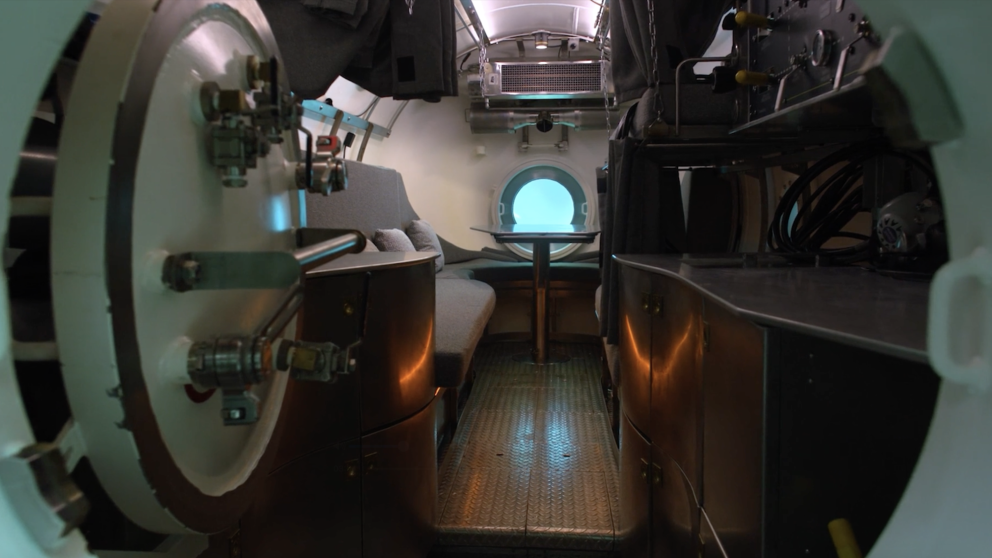
Florida Keys, USA - As global attention turns to NASA’s return to the Moon and the next era of space exploration, striking new underwater footage is revealing another frontier still largely unexplored, our own ocean. DEEP has successfully deployed Vanguard, its prototype subsea human habitat, at Tennessee Reef in the Florida Keys National Marine Sanctuary – an area of huge research interest – marking a major step toward enabling humans to live and work underwater for extended periods. Built in America, the complete system now sits at 17 meters below the surface and will serve as a base for scientists to operate directly on the seafloor, supporting crews of up to four aquanauts working underwater on multi-day research missions.
Despite covering more than 70% of the Earth’s surface, scientists estimate that 95% of the ocean remains unexplored by humans, meaning we know more about the surface of the Moon than the depths of our own planet. Vanguard is the beginning of DEEP’s ambitious habitat roadmap designed to help change that.
The deployment, which took a month to complete, involved a complex marine operation including setting an ocean floor foundation in place, fixing the habitat onto the foundation, and mooring the surface support buoy nearby.
The result is a visually striking subsea installation that offers a rare glimpse into the future of human underwater habitation. 30th June 2026 New Underwater Human Habitat Deployed In Florida Keys As DEEP Unveils ‘Vanguard’ Following deployment, DEEP will begin operational testing and training before launching science and research missions from the habitat.
The subsea platform will enable longer and more consistent access to the reef, opening up new possibilities for coral restoration, environmental monitoring and marine research. Divers will be able to spend extended periods underwater, carrying out activities such as installing nursery-grown corals, tracking reef health, studying marine ecosystems and testing new ocean technologies in real-world conditions.
Missions will also explore how the human body performs in extreme environments, with learnings expected to inform medical research in areas such as critical care, surgery and rehabilitation. In addition, the habitat could support astronaut-style training for extreme environments and deliver live educational broadcasts from the ocean floor.
The deployment of Vanguard represents a significant step toward a future where humans can maintain a continuous presence underwater, transforming how we explore, protect and understand the ocean. This is just the beginning for DEEP – experience gained from Vanguard will be applied to building larger, modular habitat systems on continental shelves around the world.
Shows: B-Roll - Vanguard Deployment – Florida Keys Contents: (Part Mute & English Speech) 1. Full habitat system underwater 2. Habitat interior underwater 3. Baseplate foundation deployment 4. Habitat deployment 5. Dr. Dawn Kernagis, Director of Scientific Research at DEEP 6. Norman Smith, Chief Technology Officer at DEEP
Notes to Editors Prototype habitat: Vanguard Organization: DEEP. Location: Tennessee Reef, Florida Keys National Marine Sanctuary Features: Dive center with moonpool entry/exit for scuba, rebreather, and hard-hat diving, reconfigurable living chamber with bunks for four and communal lounge area, safety refuges, emergency power, and breathing gas.
Supporting infrastructure: Shore-based command center, watch desk, decompression chamber, and accommodations for divers and mission support vessels. Total installation weight of foundation, ballast, and habitat: 465 tons. Structure footprint (including foundation): 14 meters (46 ft) x 12 meters (39 ft). Liveable part of the habitat: 10.7 meters (35 ft) long x 2.5 meters (8 ft) wide. Ocean floor installation depth: 17 meters (56 ft). Habitat living pressure depth: 13 meters (43 ft).
Source: DEEP Location: Florida Keys, USA
30 June 2026
