
Lung cancer is the deadliest form of cancer, claiming more lives than breast, colon and prostate cancer combined.
It doesn’t just occur in smokers. Anyone is at risk of developing lung cancer.
During National Lung Cancer Awareness Month, experts are educating people about the benefits of lung cancer screening, and of other risk factors besides smoking.
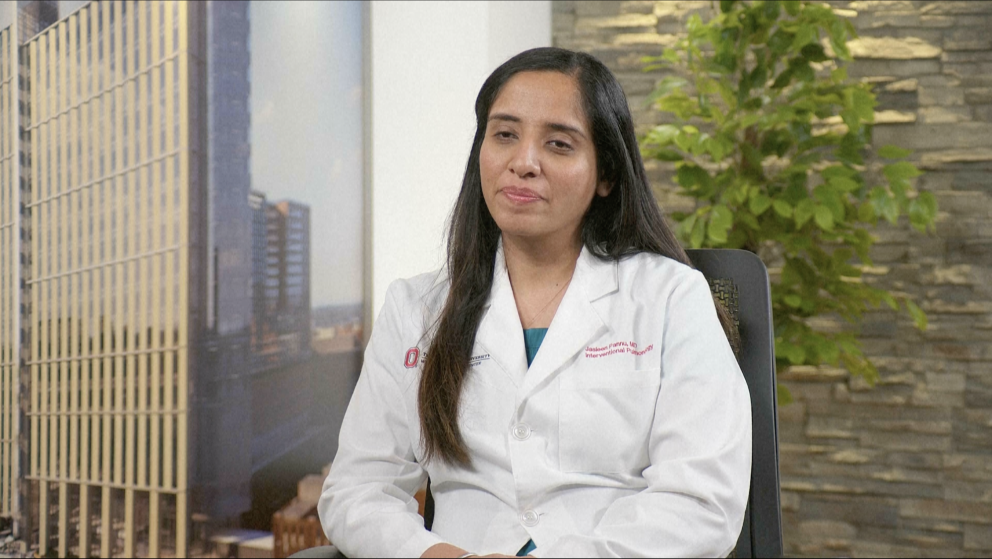
Jasleen Kaur Pannu, MBBS, is an interventional pulmonologist at The Ohio State University Wexner Medical Center.
00:00:00:15 - 00:00:06:04]
Jasleen Pannu, MBBS
My name is Jaslaine Kaur Pannu. I'm an interventional pulmonologist at the Ohio State University Wexner Medical Center.
[00:00:08:12 - 00:00:40:07]
Jasleen Pannu, MBBS
Lung cancer is extremely common. This year alone, there'll be more than 200,000 cases of lung cancer in the United States. It is also the cancer that causes the most cancer-related deaths in a year, which means that it causes more deaths than breast cancer, colon cancer and prostate cancer combined. It is a huge concern. However, there is good news that now that we have lung cancer screening available, we are able to detect lung cancer early. Hence, we are able to cure more cancers.
[00:00:43:20 - 00:01:04:23]
Jasleen Pannu, MBBS
The current lung cancer screening guidelines recommend that a low-dose CT scan of the chest should be performed for anybody between the ages of 50 to 80 years of age, and those who have smoked more than one pack a day for more than 20 years or more than that. And those who are still smoking or who have quit in less than 15 years.
[00:01:08:10 - 00:01:35:12]
Jasleen Pannu, MBBS
Screening is really important because lung cancer in its early stages does not cause any symptoms. So if we just wait for lung cancer to progress and cause symptoms, then it's too late. We want to catch cancer when it's really small. So through lung cancer screening, CT scans, we can detect small spots, which could be early cancer. And when these spots are treated or taken out with surgeries, the outcomes of cancer survival are really good. We can completely get rid of the cancer.
[00:01:38:02 - 00:01:55:19]
Jasleen Pannu, MBBS
There are several risk factors. Smoking is the most important risk factor, but there are others as well. For example, exposure to radon, which is a naturally occurring radioactive gas that occurs in basements in older homes. So that's an important risk factor in people who don't smoke.
[00:01:57:01 - 00:02:25:11]
Jasleen Pannu, MBBS
Passive smoking, or secondhand smoking, being around people who are smoking in close proximity with you, is another risk factor. Being exposed to certain fumes or toxins at work, like asbestos or diesel fumes, or certain other chemicals, can be harmful. And then there's family factors. There's a genetic mutation that can travel through families. So if there is a strong family history of cancer, that is also a risk factor.
[00:02:27:23 - 00:02:44:14]
Jasleen Pannu, MBBS
Smoking is the most important risk factor for lung cancer, but there are others like radon gas exposure, air pollution, exposure to toxins at work like asbestos and diesel fumes, and family factors like genetic mutations.
[00:02:47:06 - 00:03:17:14]
Jasleen Pannu, MBBS
About 20% of lung cancers are diagnosed in people who have not smoked before. So it is a significant concern. And these cancers can be caused by other exposures besides smoking, like radon, chemical exposures, asbestos, air pollution and genetic mutations that run in the family. So the belief that lung cancer only happens in smokers is something that needs to be done away with, because anybody with lungs can get lung cancer.
[00:03:21:06 - 00:04:09:01]
Jasleen Pannu, MBBS
So the most important thing to prevent lung cancer is to not smoke. And if you do smoke, to quit smoking. And this is not something easy, but there are programs available, both with some medications as well as some counseling, that can assist in quitting smoking. So that's the most important thing. But there are other things like avoiding passive exposure to smoking, staying away if somebody else is smoking around you, using protective equipment at work, testing your homes for radon. And if the levels are high, getting your homes treated for radon is really important. And also, if you're already at risk, then screening is a way of preventing from getting advanced lung cancers. So if you're at risk, protecting yourself from cancer to spreading further is the best thing you can do for yourself.
[00:04:11:12 - 00:04:20:03]
Jasleen Pannu, MBBS
Lung cancer is no longer a death sentence, especially when it's diagnosed early. And sometimes a five-minute scan has saved people's lives.
25 November 2025
