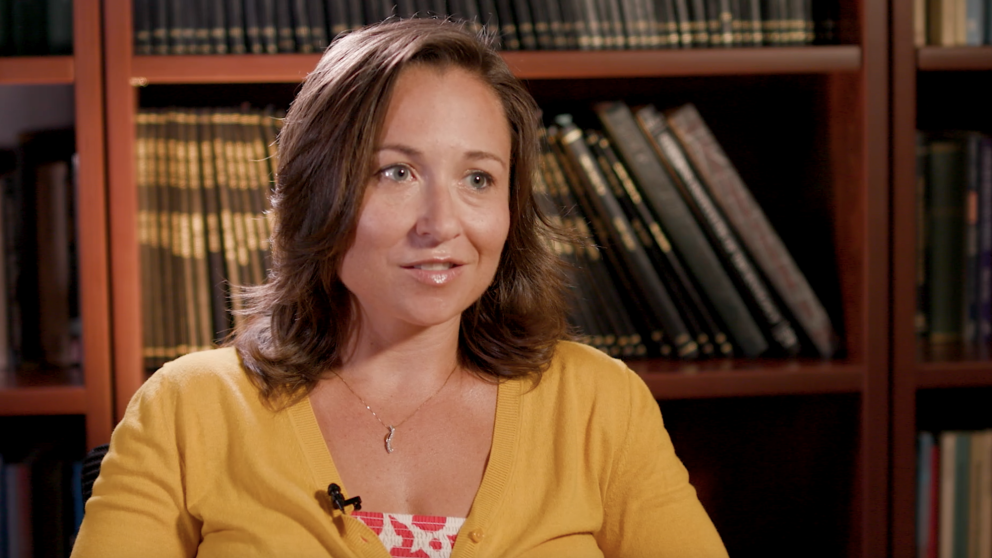

Lindsey Cormack is an associate professor of political science in the School of Humanities, Arts and Social Sciences at Stevens Institute of Technology in Hoboken, NJ. Her areas of research include American politics, specifically strategic political communication in the contexts of Congress, veterans' politics, women in politics and electoral systems.
Here, Dr. Cormack comments on the elevation of Vice President Kamala Harris to the nominee of the Democratic party for President. She explains why Harris became the presumptive nominee so quickly, what type of campaign she may run, and how race may become an issue in the campaign.
:00 - :48
"So a lot of pundits and political commentators said, oh, maybe we'll have an open convention. Maybe a bunch of people will throw their hats in the ring. That didn't happen, and there's a few good reasons. One is campaign funding is really hard. Campaign finance laws are intricate, and a lot of the money that is already donated is to the Biden Harris campaign. Harris has access to that. Many other candidates would not. The second reason is running a presidential campaign is a nationwide effort. No one else in the political sphere right now except for Biden Harris have that already underfoot, and so it's just really hard for anyone else to step in. The third reason is a lot of this is, wait, your turn. Politics plays on this. If you think you're going to have a future in the Democratic party, usually you kind of figure out where you line up and wait for that. No one else has stepped forward and formally said, I'm going to challenge Kamala Harris. And so with the delegates coalescing behind her, it seems that it's likely she's going to be the nominee."
:49 - :56
"I'm Lindsay Cormack, an associate professor of political science at Stevens Institute of Technology, and I study the US Congress in US politics generally."
:58 - 1:13
"Kamala's going to have to run an interesting straddle. She has to both say, I liked this President. I understand what he was doing. I supported him in these efforts, but I'm different and here's how. And so it's going to be a play where she has to say, point to things in the past that she's sort of helped him on, but also say she's going to do things different, and that's going to be the task that's up to her.
1:15 - 1:33
"The campaign that is Kamala Harris versus Donald Trump is very different than Joe Biden versus Donald Trump. There's different styles, there's different sorts of attitudes in this. I anticipate that things get a little bit more fiery on both sides. Both sides have reasons to point things at the other, and both of these people's personalities sort of suit that style of campaigning more than Joe Biden's did."
1:35 - 1:53
"We're probably going to see some racial components of this campaign. It's a feature of the candidates, so it's going to be a feature of the landscape. If those look different than how they did in the Obama administration is yet to be seen. But Donald Trump's campaign does seem to be willing to wade into these topics more than other campaigns had in the past. So I anticipate that we do see some racial components of this election."
1:55 - 2:25
"It's interesting to think about this because Donald Trump has campaigned against a woman before. When he campaigned against Hillary Clinton, he had many things to say about her that were negative, not only because of who she was, but because she was a woman. Now, what that did to women voters is sort of hard to understand. He still did win the majority of white women voters, but there was also this backlash that we saw in the years since then where more women got into politics. And so it's my sort of thought that more women are going to hear these messages and say, "oh, we've seen this before," and whether they are driven away from him or not, it's probably going to activate them."
2:27 - 2:45
"The question of if the vice president matters is a big one, because if you'd asked anyone a year ago, they would've been like, not really, but now we see that it really does matter who's in that second spot. They might be the people who are elevated. As for what she's going to look for, it's someone who balances the ticket. Someone who can develop some sort of personal following in a swing state. Someone who can help her get this past the finish line."
2:47 - 3:05
"On the question of before we're ready for a woman of color, we need to remember the US electorate has shown that it's willing to vote for people of color. Barack Obama won two elections. They're also willing to vote for a woman. Despite not winning the presidency, Hillary Clinton did win more popular votes, and so we know that the electorate is capable of it. The question of if it's this candidate is the only question that matters."
23 October 2024
