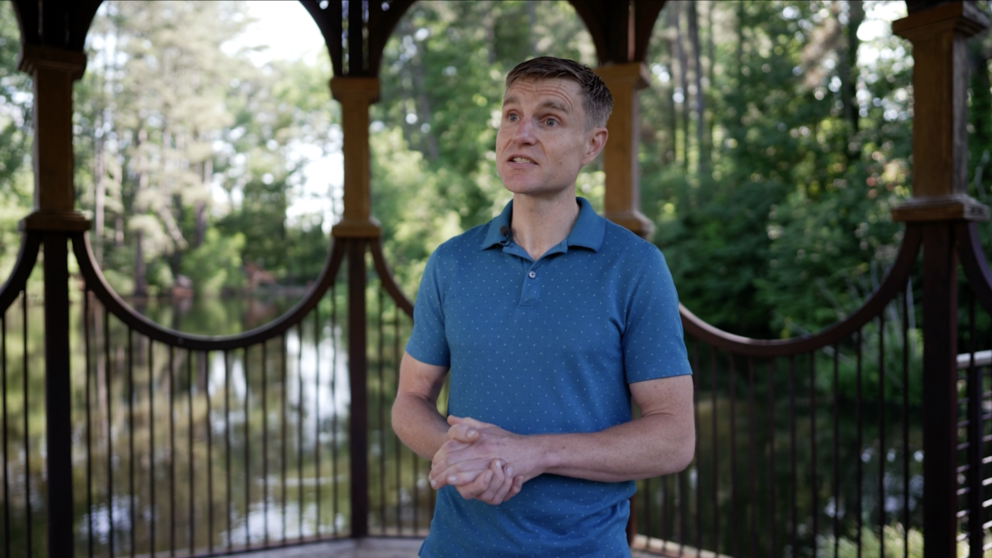

New research is confirming what many have long felt: nature is medicine. And nature revelers can receive an extra dose during the summer solstice, the day with the longest period of daylight, on June 20.
Matt Browning, associate professor at Clemson University, reveals that time in nature, whether real or virtual, directly supports better health outcomes and significant economic savings. In a recent study analyzing data from more than 5 million people, Browning found that proximity to nature can reduce annual health care costs by nearly $400 per person. From improved mental health and lower rates of chronic disease to reduced hospital stays and medication use, both green spaces and immersive virtual environments are proving to be powerful, cost-effective tools in preventative care. With technology enabling access for underserved and urban populations, Browning advocates for “mindful time in nature” as a scalable prescription for a healthier, more connected society.
Matthew Browning is an associate professor and the co-director of the Virtual Reality and Nature Lab at Clemson University in the Department of Parks, Recreation and Tourism Management. Browning’s research career encompasses three domains, nature, health and virtual reality and the intersections between them. He co-directs the Virtual Reality & Nature lab (VRN) at Clemson University, which researches the therapeutic effects of restorative environments on human health and looks for ways to evaluate and enhance the frequency, richness, and meaningfulness of human-nature interactions.
Headline: How spending time in nature can reduce healthcare costs
Slug: economic-benefits-nature
Sources: Clemson University
Disclosures/Affiliations: N/A
Location/Date: Clemson University - May 30, 2024
Provider Reporting Tags: Clemson University
Provider Keywords: nature, health, mental health, health care, health care cost, outdoor time, benefits of nature, public health, virtual reality, economic benefits, health and wellness, summer solstice, longest day of the year, nature benefits, AP Campus Insights, Clemson University
Copyright Holder: Leave blank.
Copyright notice: Leave blank.
Location: Clemson, South Carolina, United States
Restrictions: Please credit Matthew Browning, Clemson University.
00;00;00;00 - 00;00;13;22
Hey, my name is Matt Browning. I'm an associate professor in the Department of Parks, Recreation and Tourism Management and co-director of the Virtual Reality in Nature Lab. I'm also honored to be a scientific advisor for the company Nature Quant.
00;00;15;28 - 00;00;42;18
Being outdoors in nature can make us feel better and be healthier. When we spend time outdoors, we're less likely to get sick as our immune function is better and we are happier. We're more likely to talk to people and feel a trusting bond with other people, and we're more likely to be physically active. And all of these things lead to a higher quality of life and less risk of many different chronic diseases.
00;00;44;19 - 00;00;52;17
We just completed a study with over 5 million people, with one of the largest health care insurers in the whole country, Kaiser Permanente.
00;00;52;25 - 00;01;14;29
We found that people who live closer to nature are less likely to spend more on health care, and that actually translates to dollars and cents, not just for people, but for employers and for the entire country. That economic benefit, we found, is nearly $400 per person per year, and that translates to billions and billions of dollars in savings.
00;01;16;28 - 00;01;45;25
Hundreds of studies from millions of people have found that spending more time in nature is linked to better health and well-being. A famous study in the UK that we are now replicating here in the United States finds that 120 minutes per week, or just two hours, is associated with significantly better well-being. That translates over to you going to the doctor less and having less chronic conditions later in life.
00;01;45;27 - 00;02;02;09
For example, there's a 10 to 20 percent reduction in all-cause mortality, cardiovascular mortality, cardiovascular disease incidence, diabetes, depression, anxiety, loneliness and many other things that are afflicting our society.
00;02;04;22 - 00;02;34;08
People can benefit from spending time in nature just by looking at it, or just hearing it, or doing something much more immersive, like going for a hike in a forest with birds calling and waterfalls and seeing beautiful landscapes. We know this because there have been studies, for example, in hospitals where people had a view of a brick wall or a view of a forest, and if they have a view of a forest, they called a nurse less.
00;02;34;08 - 00;03;04;06
They take less pain medication, and they actually spend less time in the hospital, and all of that is just from having a view of nature. On the opposite extreme, week-long expeditions with youth at risk, where they go out in the wilderness and learn who they are and take all these different adventures, that can totally transform people's lives so that they are more self-confident.
00;03;04;28 - 00;03;33;18
Both real nature and virtual nature are always cost-efficient strategies to improve people's health with virtual nature. The cost of these VR headsets have dramatically decreased and are just a few hundred dollars, which compared to prescription medication or renovations for health care facilities, is a trivial expense, and these can last for years and be used with thousands of patients with real nature.
00;03;33;19 - 00;04;00;23
The economic benefits can literally grow over time. When someone plants a tree, they see that tree grow with a larger canopy cover, and the older that tree is, the more health benefits you get, the more air pollution will be removed from the air, the less heat will be in that environment. So,people will be spending less on their AC bills and many other benefits as that tree matures.
00;04;02;15 - 00;04;32;16
We are living in a technology age, where people are spending 95% of their time indoors. That means they are spending an hour or less outdoors. Now, when you're outdoors, you can be very mindful and be taking in the nature around you or you can have your headphones in and be glued to your phone. We find that being mindful when you’re outdoors goes way beyond the health benefits of just happening to be around nature.
00;04;32;23 - 00;04;45;13
So, I think as we move forward, we are getting increasingly prescribed mindful time outdoors in beautiful and biodiverse areas such as the one we're in today.
00;04;48;19 - 00;05;04;29
Wide, Olivia assembling a VR kit
00;05;04;29 - 00;05;13;19
Medium, VR headset in sanitation box
00;05;13;20 - 00;05;37;05
CU, Olivia zipping up VR headset
00;05;37;06 - 00;05;50;29
CU, Olivia unzipping VR headset and sanitizing it
00;05;51;00 – 00;05;58;11
Medium, Matt working at computer
00;05;58;12 - 00;06;09;25
CU, Matt on computer
00;06;09;26 - 00;06;22;20
Wide, Matt and Olivia packing up a VR set
14 October 2025
