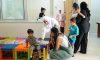

Beirut, October 2025 – As Lebanon continues to reel from cascading and inter-related crises, including a devastating economic meltdown, the Beirut port explosion, 2024 conflict and displacement, schools have become beacons of hope—helping children heal, rebuild and drive the nation’s recovery.
Over the past decade, Lebanon’s multiple and overlapping crises have had severe repercussions on children’s education. But the back-to-school season this year was marked by renewed optimism, particularly after the formation of a new government and a ceasefire agreement, reinvigorating national efforts to help students build a better future for their country.
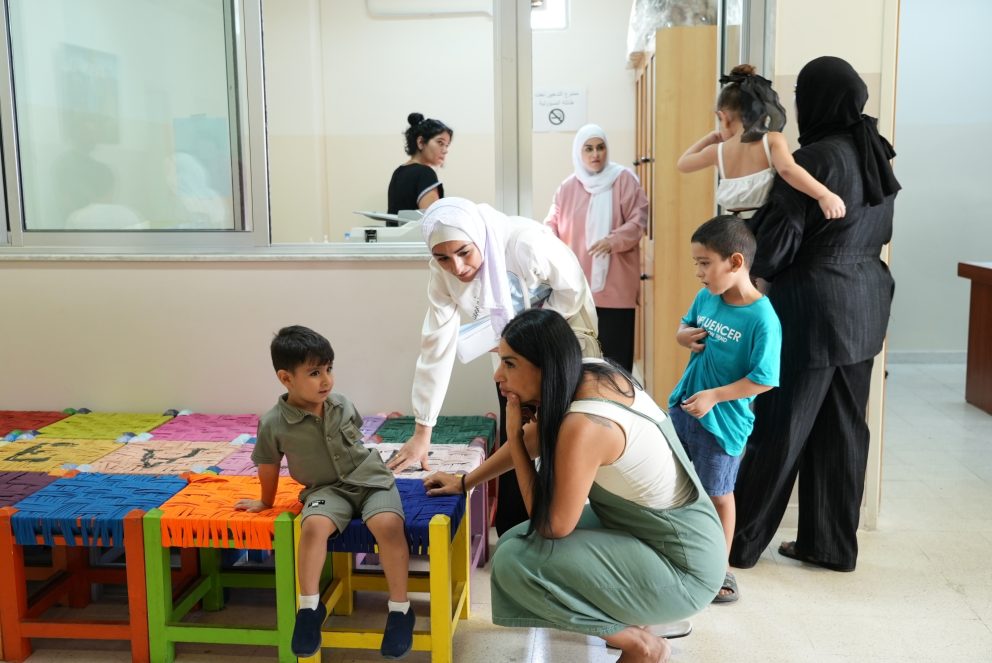
In countries affected by fragility, schools provide a safe space, routine, and stability, helping children cope with trauma, loss, and uncertainty. Education supports children’s mental health and well-being, offering hope and a sense of normalcy when everything else has been disrupted. Going to school reduces risks of exploitation, violence, and early marriage, and empowers children to express themselves, build peer support networks, and envision a brighter future.
“At the beginning of last year, we opened the school doors even though the first floor was still housing displaced families. Attendance remained strong, and students showed remarkable commitment. Together, we shared both the hardships and the small moments of resilience.” says Rana Itani, Principal at Omar Al-Zaanit School.
After a very difficult year, the back-to-school moment was not simply a return to classrooms, it was a powerful leap forward, reigniting hope and resilience in the nation’s children.
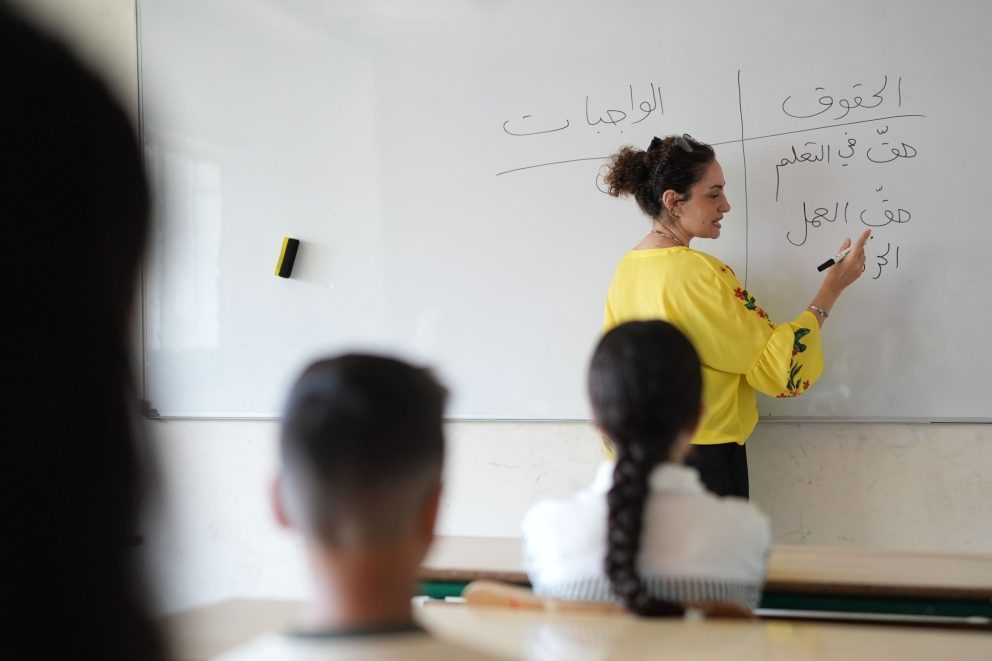
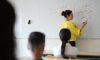
“(When I hear ‘back to school') the first thing that comes to mind is the happiness that I will see in the eyes of my students,” remarks Diana Itani, teacher at Mohammed Shaml School. “For parents, returning to school symbolizes hope – a chance to build their children’s future and equip them with essential life skills. For students, it is an opportunity to reconnect with friends and teachers, immerse themselves in the school community, and gain academic, social, and personal growth.”
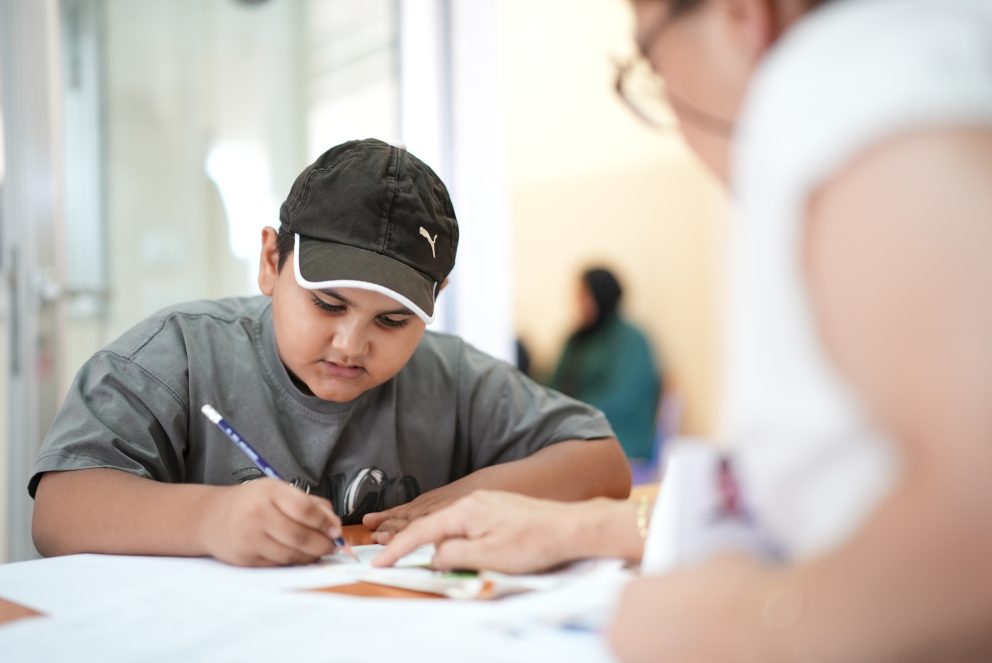
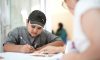
Across Lebanon, students like Qasim understand the true value of education and the doors it can open for their future. “If we do not go to school, we will not have a future. We have to study to be able to work in the profession we like. Education guarantees that you can do what we like later on. Yes, it is hard to study sometimes but the outcome outweighs the trouble. It is the route to achieve our childhood dreams.”
Economic recovery and growth rely on education
Education is key to Lebanon’s economic recovery, providing children and youth with the skills, knowledge, and resilience needed to rebuild their lives and contribute to the nation’s future growth. A strong education system not only prepares young people for local and global competitiveness, but also helps reduce vulnerabilities, promote social cohesion, and ensure that every child can play an active role in rebuilding the country’s economy and society.
More than half of Global Partnership for Education (GPE) partner countries are impacted by fragility. Lebanon joined GPE in 2024.
GPE and partners are now supporting the Ministry of Education and Higher Education to implement Lebanon’s General Education Plan (2021–2025) and develop a forward-looking multi-year sector plan beyond 2025.
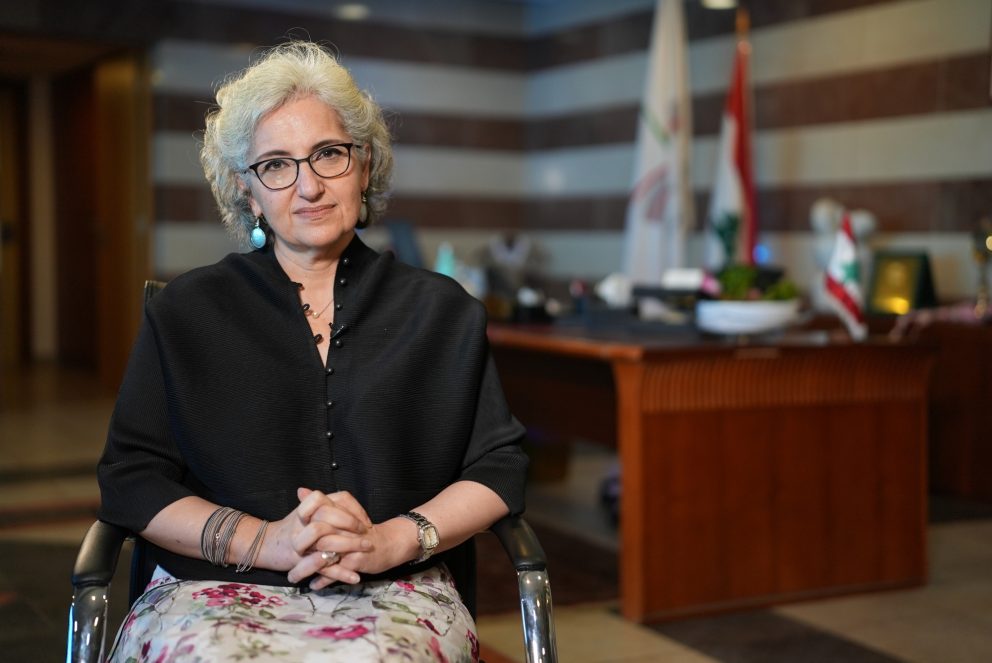
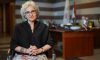
Minister of Education and Higher Education, Rima Karami, explains, “When I assumed office, the first step I took was to review existing partnerships. One of the most encouraging discoveries was that Lebanon had joined the GPE as a partner country. Exploring the details of this partnership was a turning point. The focus and emphasis on partnerships, giving the ministry a voice, allowing it to define its vision, providing support in this way, calling for us to work on the sector, facilitating the connection process, bringing funds, securing grants—all in a way that gave me a framework.”
The government is committed to ensuring every child stays in school by implementing inclusive policies that broaden access to early childhood education, strengthen student retention, and provide flexible learning opportunities for children who are currently out of school.
GPE financing campaign
GPE launched an ambitious financing campaign at the UN General Assembly in September to mobilize $5 billion and unlock an additional $10 billion for education, multiplying learning possibilities for 750 million children in 96 countries.
Co-hosted by Italy’s Prime Minister Georgia Meloni and Nigerian President Bola Ahmed Tinubu, GPE’s campaign aims to turn the tide on the global learning crisis as the world stands at an inflection point.
Read the case for investment
00:00 - Aerial view of Beirut, Lebanon
00:06 - A classroom ahead of the 2025 enrolment.
00:09 - Diana Itani, Teacher at Mohammed Shaml School, works at her desk.
00:20 - Diana Itani - INTV
00:20 - 00:31
[When I hear “back to school”] The first thing that comes to mind is the happiness that I will see in the eyes of my students. Today I saw them, there are students who are so happy to come to school.
00:31 - 01:02
For parents, returning to school symbolizes hope—a chance to build their children’s future and equip them with essential life skills. For students, it is an opportunity to reconnect with friends and teachers, immerse themselves in the school community, and gain academic, social, and personal growth.
01:01 - Various classroom scenes Beirut
01:31 - Qasim Zuhair Suliman, student - INTV
01:33 - 02:02
If we do not go to school, we will not have a future. We have to study to be able to work in the profession we like. Education guarantees that you can do what we like later on. Yes, it is hard to study sometimes but the outcome outweighs the trouble. It is the route to achieve our childhood dreams.
02:02 - Rana Itani, Principal of Omar Al-Zaani School - INTV
02:02 - 02:33
At the beginning of the year, we opened the school doors despite the fact that the first floor was still housing displaced families. Attendance remained strong, and students showed remarkable commitment. Together, we shared both the hardships and the small moments of resilience.
02:29 - 03:03
The teachers played a crucial role in reassuring students that they were in a safe space, in a school—one where experiences, however difficult, could be faced collectively. Once the war ended, our focus shifted to supporting students both academically and emotionally.
03:03 - Sohaila Kobrosli, Principal of Mohammed Shaml School, works at her desk.
03:10 - Sohaila Kobrosli - INTV
03:10 - 03:44
To help students adapt after the war, we organized activities designed to ease stress, formed student committees to encourage peer connection, and created safe spaces for open conversations within our limited means.
03:44 - 04:12
As an educational team, we tried to reassure students that the war was over and to offer them as many activities as possible to ensure their mental wellbeing. This was the best we could provide.
04:12 - 04:38
These efforts brought noticeable change. Students became more focused in class, more engaged in activities, and more eager to come to school without fear. A sense of positivity and comfort returned to the school environment.
04:38 - Rima Karami, Lebanese Minister of Education and Higher Education., works at her desk.
04:48 - Rima Karami - INTV
04:48 - 05:17
When I assumed office, the first step I took was to review existing partnerships. One of the most encouraging discoveries was that Lebanon had joined the GPE as a partner country. Exploring the details of this partnership was a turning point.
05:17 - 05:43
The focus and emphasis on partnerships, giving the ministry a voice, allowing it to define its vision, providing support in this way, calling for us to work on the sector, facilitating the connection process, bringing funds, securing grants—all in a way that gave me a framework.
05:43 - 06:09
It is not just for securing money, which one might get excited about, but rather to link it deeply to the strategic vision and strategic plans we aim for. There are many experiences we can draw upon to follow the path we want.
06:09 - 00:06
But all along, our dream has been to achieve social justice and ensure the right to education for every child, regardless of their background, location, social status, or even educational abilities.
06:26 - 06:45
So, this is my big dream. At its heart, I have a vision that the school and educational institution become a safe place for this student, a place they want to come to because they see it as valuable.
06:45 - Paolo Fontani, Director of UNESCO Regional Office in Beirut, works at his desk.
06:53 - Paolo Fontani, INTV
06:53 - 07:25
Well, Lebanon has a very well established system of coordination within the education sector. The minister is actually leading the lag, the Lebanon Educational group, I think that's a very important place where everybody sits around the table and discusses priorities before deciding how to fund those priorities and try to support the government and the Ministry of Education, particularly, in their one, UNESCO plays an important role. We are the co-chair of that. We lead that group.
07:25 - 07:56
Well, the GPE is a good thing for UNESCO everywhere. First of all. So, we truly appreciate the work we've been doing in the last decade or so with GPE, in Lebanon and everywhere. The importance of a GP is not so much they want to bring in the money into the country, but is there one of representing an instance that demands a certain level of coherence, in the use of funds, within the education sector, that I think is a value added of GPE and one that I think all appreciate you around the table.
12 November 2025
