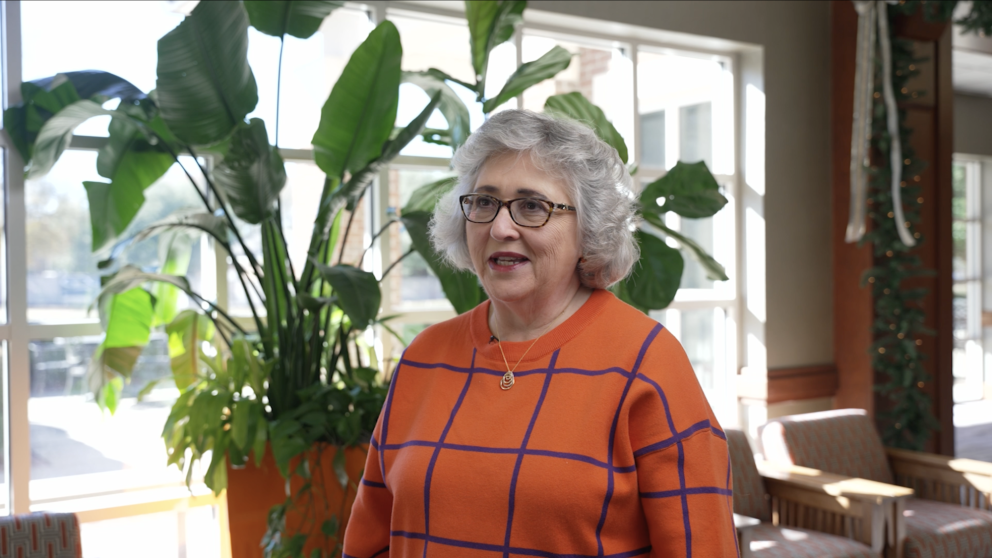

Memorial Day marks the beginning of what safety experts call the "100 Deadly Days", a summer period witnessing a troubling spike in traffic crashes. Clemson University transportation expert Terecia Wilson offers critical guidance by providing safe driving tips to avoid distracted driving. Wilson emphasizes that texting remains the most dangerous distraction behind the wheel as she explains that sending or reading a text takes your eyes off the road for 5 seconds which at times can be like driving the length of an entire football field with your eyes closed. With more teens on the road during summer months, Wilson's safety recommendations aim to protect young drivers during this high-risk period as families embark on summer travel plans.
Terecia Wilson is a professor of practice in Clemson University’s Master of Transportation Safety and Administration (MTSA) program. Terecia has more than 30 years of experience in highway traffic safety through the South Carolina Department of Transportation and Department of Public Safety. Wilson is the immediate past Co-Chair of the Transportation Research Board’s Standing Committee on Highway Safety Workforce Development and is a member of the Board of Advisors for the National Association of Women Highway Safety Leaders.
Headline: How to keep drivers safe during the 100 deadly days of summer? How to stay safe during the summer travel season
Slug: summer-travel-safety
Sources: Clemson University
Disclosures/Affiliations: N/A
Location/Date: Clemson University 11 December 2023
Provider Reporting Tags: Clemson University
Provider Keywords: travel safety, travel safety tips, travel tips, driving tips, highway safety, driving safety, distracted driving, driving fatigue, road trip safety, car safety tips, car travel,Memorial Day, summer travel safety, summer travel, teen driving, 100 deadly days, AP Campus Insights, Clemson University
Copyright Holder: Leave blank.
Copyright notice: Leave blank.
Location: Clemson, South Carolina, United States
Restrictions: Please credit Terecia Wilson, Clemson University
00;00;00;00 - 00;00;09;15
My name is Teresa Wilson, and I'm the assistant director of the Institute for Global Road Safety and Security here at Clemson.
00;00;09;17 - 00;00;18;01
And I'm also a professor of practice in the Master of Transportation Safety Administration Program, the MTSA program.
00;00;20;19 - 00;00;49;22
And it's really important to take a rest break about every 2 hours, stop for about 15 minutes. It helps to refresh you as a driver so that you'll be more alert when you get back on the road. It's also important before you leave to make sure that you have had a really good night's sleep the night before. Adults need at least 7 hours of sleep to be fully rested, alert and ready for travel.
00;00;51;29 - 00;01;17;01
One of the most effective strategies for reducing distracted driving is stowing your cell phone, putting it out of sight, out of mind. Because cell phones definitely represent a major distraction in vehicles. So that, if you don't do anything else, be sure that you stow that phone, turn it off and put it in a do not disturb mode.
00;01;17;04 - 00;01;50;25
If you have to, remove that temptation. Remove that temptation to pick it up, to look at an incoming text or something else. Because the time you spend just glancing at a text would basically cause you to literally drive the length of a football field without seeing the road. So, if you're on a winding road and you take the length of a football field before you see where you're going, you could end up running off the roadway into trees over an embankment.
00;01;50;27 - 00;02;13;15
Or even if you're on a street-level road, there's the tendency to drift into the opposite lane. So don't let that happen. Just stow that phone and make a vow. Make a commitment to yourself, your family, and other people on the road that you are not going to be a distracted driver and ruin someone else's plans.
00;02;13;18 - 00;02;39;02
So, if there's anything that's going to occupy your mind or your vision that can be a distraction from driving, then get rid of that. Don't be engaging in arguments with your husband or wife about, Well, we should have stopped, you know, so far back there. Why did you keep going? In other words, let's have a pleasant atmosphere inside your vehicle so you're not distracted.
00;02;41;06 - 00;02;56;26
And it's important to set a good example because even if you do have your children with you, regardless of whether they're young or teenagers, it's important as a driver to set a good example for other people by paying attention to what your primary job is.
00;02;59;06 - 00;03;21;19
Well, I think one of the best things that you can do if you're driving solo, and I do a lot of solo driving, is being well-rested before you even start your trip because if you're well-rested, then you're going to be able to focus on that primary job of safely operating your motor vehicle.
00;03;23;10 - 00;03;51;27
Know the entire route that you're traveling. You might want to listen to some music, but make sure that if you do, it's music that is not going to entice you or start making you feel really relaxed and start getting sleepy. So again, your primary job as a driver is to do just that. Focus on what's going on the roadway in front of you, and remember to stop and take those rest breaks every 2 hours for about 15 minutes.
00;03;51;27 - 00;04;29;07
Drink plenty of fluids, water and juice. You know, some people want to drink coffee or tea just because they think the caffeine is going to help them in some way. But water is really the best hydration when you're traveling and so, you know, stay well hydrated, make sure you take breaks to eat and do take those breaks to get out, walk around, refresh because you'll be amazed at how much more focus you will have when you get back into the vehicle and start driving again.
14 October 2025
